Deep Fryer Owner’s Guide: Practical Help For Everyday Cooking
Quick start you can finish fast
You already bought the Deep Fryer, so let’s get you to crunchy food without a lot of fuss.
First setup checklist
- Place the Deep Fryer on a stable, heat‑resistant surface with at least 8–10 inches of space around it.
- Make sure the power cord is accessible but not stretched tight or hanging over an edge.
- Remove the lid, basket, oil container, and any packaging or stickers from inside.
- Wash the basket, lid, and removable oil container in warm soapy water, then dry thoroughly.
- Wipe the inside of the body and heating area gently with a soft, slightly damp cloth, then dry.
- Fill the oil container with fresh frying oil between the MIN and MAX lines marked inside.
- Close the lid (if your Deep Fryer has one), plug the unit in, and set the temperature control to about 350–375°F without any food for a short preheat.
- Let it heat for about 5–10 minutes, then turn it off and let the oil cool fully; this first warm‑up helps burn off any light manufacturing residue.
Simple first-use example: fries
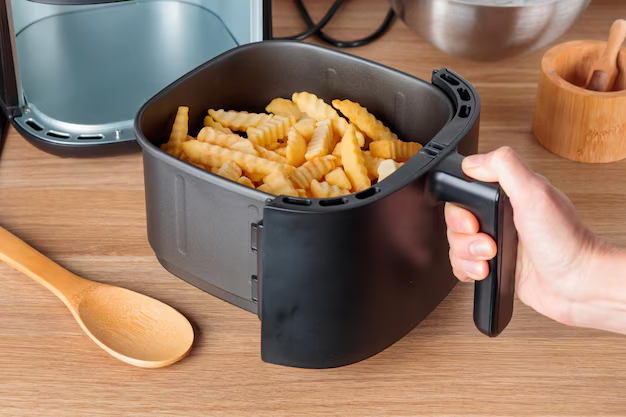
Frozen fries are a forgiving first run for your Deep Fryer.
- Fill with oil between MIN and MAX, then preheat to about 350–375°F.
- Pat the fries lightly if they’re very frosty to remove excess ice.
- Load the basket about half full so oil can circulate around the fries.
- Slowly lower the basket into hot oil and close the lid if available.
- Cook for about 4–7 minutes, checking at the lower end for light golden color and a crisp exterior.
- Lift the basket, let oil drain back into the Deep Fryer, then transfer fries to a paper‑towel‑lined tray and season immediately.
Know your parts without guessing
Most units have
- Body / housing – Holds the heating system and supports the oil container; this part never goes in the sink.
- Oil container / tank – The metal basin that holds the oil; usually removable for cleaning and oil changes.
- Basket – Mesh or perforated metal container that holds food while allowing oil to flow through.
- Handle – Keeps your hand a safer distance from hot oil while raising and lowering the basket.
- Lid – Helps control splatter and retain heat; may include a small viewing window and vent.
- Temperature control dial or buttons – Lets you set oil temperature, typically between about 250–375°F.
- Power indicator light – Shows when the Deep Fryer is plugged in or switched on.
- Heating indicator light – Turns on while the oil is heating and usually switches off once it reaches the set temperature.
- Heating element – The part that actually heats the oil; may be built into the base or a visible metal coil inside the tank.
Some units have
- Adjustable thermostat with temperature markings – Gives more precise control of oil temperature.
- Timer control – Paired with a bell or beep to remind you when cooking time is up.
- Oil filtration system – Helps strain food bits from used oil into a separate container for reuse.
- Replaceable odor filter in the lid – Reduces frying smells venting into your kitchen.
- Cool‑zone under the heating element – Keeps crumbs away from the hottest area to slow down oil breakdown.
- Detachable power cord – Can be unplugged from the Deep Fryer itself for easier storage and cleaning of the body.
Safety that actually prevents problems
- Never move or carry the Deep Fryer when oil is hot. Hot oil sloshes easily and the unit is heavier than it looks.
- Keep water and ice away from hot oil. Even a small amount can cause violent splattering.
- Leave at least several inches of space above and around the Deep Fryer so heat and steam can dissipate safely.
- Use only cooking oils suitable for high heat, such as peanut, canola, sunflower, or blended frying oils.
- Stay within the MIN and MAX oil fill lines; too little risks overheating, too much risks overflow.
- Dry food thoroughly before frying, especially items that were frozen or marinated.
- Keep the power cord away from hot surfaces and never let it hang off a counter edge.
- Do not leave the Deep Fryer running unattended, especially during preheating and when loading or unloading food.
- Allow oil to cool completely before draining, filtering, or cleaning; this usually takes at least 1 hour.
- Unplug the Deep Fryer after every use. This protects both you and the appliance.
- Keep children and curious pets at a distance while the Deep Fryer is hot or plugged in.
- If you notice unusual smells, smoke at normal temperatures, or crackling sounds with dry food, stop using it and check the oil and interior for problems.
Daily use for better results
Here’s a simple rhythm for everyday frying that keeps things tasty and less messy.
- Place and level the Deep Fryer, then check that the oil container is seated properly and clean inside.
- Fill with fresh or filtered oil between the MIN and MAX lines.
- Close the lid if available and set your desired temperature based on what you’re cooking.
- Wait for the heating light to turn off or for a preheat indicator to show the oil is ready.
- While you wait, pat food dry and remove excess breading or loose flour that would burn in the oil.
- Load the basket in a single loose layer; avoid packing food tightly together.
- Slowly lower the basket into the oil to limit splashes, then close the lid.
- Check food near the lower end of the recommended time; shake the basket gently once during cooking if safe.
- When done, lift the basket, let oil drip back into the Deep Fryer for a short moment, then transfer food to a rack or paper towels.
- Turn off the heat, unplug the Deep Fryer, let it cool completely, then cover or strain the oil if you plan to reuse it.
Helpful starting points for common foods
| Food / task | Oil temperature range | Approx. time range | Doneness cues | Common mistakes |
|---|---|---|---|---|
| Frozen fries | 350–375°F | 4–7 minutes | Golden color, crisp edges, no icy center | Overloading basket, oil too cool, skipping preheat |
| Fresh cut fries | Two-stage: 300–325°F then 350–375°F | First fry about 4–6 minutes, second about 2–4 minutes | Tender inside from first fry, crisp and browned after second | Cooking all at high heat, not drying potatoes, cutting too thick |
| Breaded chicken pieces | 325–350°F | 6–10 minutes depending on size | Deep golden crust, juices run clear, internal temp about 165°F | Oil too hot (burnt outside, raw inside), very wet batter, crowding |
| Chicken wings | 350–375°F | 8–12 minutes | Golden brown, crispy skin, no pink near bone | Frying straight from heavy ice crystals, oil too low, stacking wings |
| Fish fillets (breaded or battered) | 325–350°F | 4–8 minutes | Crisp coating, opaque flaky fish inside | Batter too runny, batter dripping onto element, moving basket constantly |
| Onion rings | 350–375°F | 2–4 minutes | Light golden, crisp but not hard | Not shaking off excess batter, frying too dark, oil too cool |
| Donuts / churros | 325–350°F | 3–6 minutes | Even golden color, cooked through center | Oil too hot, flipping too often, making pieces too thick |
| Reheating breaded leftovers | 325–350°F | 2–4 minutes | Hot throughout, crisp exterior restored | Starting with very oily leftovers, overcrowding, oil too cool |
Cleaning and maintenance that doesn’t ruin parts
After each use
- Turn the Deep Fryer off, unplug it, and let the oil cool completely.
- Skim out large crumbs or food bits with a slotted spoon once the oil is safe to work near.
- If you reuse oil, strain it through a fine mesh or coffee filter into a clean container and store it in a cool, dark place.
- Wipe any oil from the exterior with a soft cloth and mild dish soap solution, then dry.
- Wash the basket and lid in warm, soapy water; dry thoroughly before reassembling.
Weekly or every several uses
- Completely drain old oil that has darkened, smells stale, or smokes at normal frying temperatures.
- Remove the oil container and wash it with hot, soapy water or a degreasing dish detergent; rinse and dry fully.
- Wipe the inside of the body carefully, avoiding soaking or spraying water near electrical components.
- If the heating element is removable, wipe it with a soft, damp cloth and dry; do not immerse unless explicitly allowed by the manufacturer.
- Clean or replace odor filters in the lid if your Deep Fryer uses them.
When it smells weird or performs poorly
- If the Deep Fryer smokes at normal frying temperatures, the oil is usually old or contaminated; replace it.
- If food tastes off or slightly rancid, discard the oil and give the tank, basket, and lid a deeper clean.
- If heating is uneven, check for heavy carbonized buildup on the tank bottom or around the heating element; clean carefully.
What not to do
- Do not use metal scouring pads on the tank, basket, or lid if they have a nonstick or coated surface; use non‑abrasive sponges instead.
- Do not pour used oil down the sink; use a container and follow local disposal or recycling guidelines.
- Do not spray water or cleaning solution directly into the body; apply to a cloth first.
- Do not bend or strike the heating element; damage here affects heating and can make the unit unsafe.
- Do not reassemble the Deep Fryer until all washed parts are completely dry.
Quick maintenance checklists
If your Deep Fryer smells bad even when empty:
- Check the lid, handle joints, and under any removable trims for old oil residue.
- Clean or replace any odor filter in the lid.
- Wipe the exterior sides and cord, which often collect faint grease films.
If the Deep Fryer no longer gets food as crisp:
- Replace the oil if it has been reused many times or is darker than fresh tea.
- Verify you are preheating to at least 350°F for items that need a crisp crust.
- Clear out crumbs from the bottom that burn and cool the oil.
Troubleshooting that gets you unstuck fast
Common issues at a glance
| Symptom | Likely cause | Fix |
|---|---|---|
| Deep Fryer will not turn on | Unplugged cord, tripped outlet, safety switch not engaged | Confirm plug is seated, test a different outlet, make sure oil tank and lid are seated if your model uses safety interlocks. |
| Oil does not heat up | Temperature set too low, heating element not connected correctly, failed thermostat or element | Increase temperature setting, check that removable element is locked into place; if still cold, stop using and seek service. |
| Oil takes a very long time to heat | Very large oil volume, cold room, low power supply, heavy buildup on element | Verify oil is at correct fill line, allow extra preheat time, clean buildup on tank and element. |
| Food is greasy or soggy | Oil too cool, basket overcrowded, oil old or broken down | Preheat fully, fry in smaller batches, replace old oil and clean basket and tank. |
| Food burns on the outside but is raw inside | Oil too hot, pieces too large or too thick | Lower temperature to around 325–350°F and cook longer, cut food into smaller pieces. |
| Excessive smoking during normal frying | Oil past its smoke point, contamination with crumbs or seasoning, wrong type of oil | Turn off heat, let cool, replace oil, and clean tank; switch to a high‑heat frying oil. |
| Oil foams or bubbles up strongly without much food | Oil is old, contaminated with water or soap, or mixed oil types | Discard oil, clean tank thoroughly, dry completely, and refill with fresh single‑type oil. |
| Strong burnt smell | Crumbs or batter stuck at bottom, oil overheated repeatedly | Let oil cool, strain or replace, scrub tank bottom gently, avoid exceeding recommended temperatures. |
| Oil splatters heavily when adding food | Food is wet or icy, basket dropped too fast, oil level too high | Pat food very dry, lower basket slowly, verify oil is at or below MAX line. |
| Unit feels unusually hot on the outside | Insufficient clearance around Deep Fryer, long continuous use, blocked vents | Allow more air space, take breaks between batches, keep vents and lid openings clear. |
| Rattling or humming noise | Normal expansion sounds, basket touching element or side, loose parts | Reseat basket so it hangs freely, check that tank and lid are fully seated; if noise is loud or grinding, stop and inspect. |
| Oil leaks under the Deep Fryer | Oil container not seated, crack in tank, drain not closed fully | Unplug, let cool completely, remove and inspect tank, ensure drains and seals are closed; if cracking is found, discontinue use. |
If the Deep Fryer will not start: quick decision path
- Check that the outlet works by plugging in another small appliance.
- If the outlet is fine, confirm the Deep Fryer’s power switch is set to On and the plug is fully inserted.
- Make sure the oil tank and heating element (if removable) are locked into place; some units will not power on otherwise.
- Close the lid if your Deep Fryer uses a lid switch for safety.
- If there is still no sign of power, unplug the unit, let it cool, and inspect for visible damage; if none is obvious, the internal safety cut‑off or element may need professional service.
If food keeps coming out soggy: quick decision path
- Verify that the oil temperature is set high enough for the food you are cooking.
- Confirm that you are allowing enough preheat time before frying.
- Reduce the size of each batch so the basket is not overcrowded.
- Check that the oil is not dark, thick, or smelling heavy; replace if so.
When to stop and get service
- Visible cracks, warping, or holes in the oil container or body of the Deep Fryer.
- Power cord or plug that is frayed, melted, or hot to the touch during normal use.
- Deep Fryer repeatedly trips circuit breakers or fuses when plugged in alone.
- Oil heating uncontrollably hot, even at low or Off settings.
- Persistent strong electrical or burning smells not related to oil or food.
- Liquid leaking into the base or around electrical components.
- Any shock, tingling, or sparking when you touch the Deep Fryer or its controls.
In these situations, unplug the Deep Fryer, let it cool, and arrange for qualified service or replacement rather than trying to repair internal parts yourself.
Smart habits that save time
Storage and setup
- If you reuse oil, cover the Deep Fryer or store oil in a sealed container to keep out dust and odors.
- Store the basket inside the tank only after both are completely dry to prevent rust or mold.
- Keep the Deep Fryer in an easy‑access spot rather than buried in a cabinet; less effort to pull it out means you’ll use it more efficiently.
Using accessories wisely
- Use only heat‑safe utensils, such as metal tongs or slotted spoons, to move food; avoid plastic that can soften around hot oil.
- If you line baskets, choose liners designed for high‑heat frying and never block all the holes; oil must circulate freely.
- Replace filters when they stop helping with odors rather than trying to wash disposable ones.
Habits that reduce mess and improve results
- Designate a “frying tray” lined with paper towels or a rack so hot food has a landing spot away from the Deep Fryer.
- Keep a small container or bowl nearby for catching crumbs and trimming bits before they hit the oil.
- Group similar foods in one session (fries together, seafood together) to keep flavors from mixing too much in the oil.
Quick FAQ
How often should I change the oil in my Deep Fryer?
In home use, many people change oil after about 5–8 frying sessions, but it depends on what you cook. When oil darkens, smells heavy, foams easily, or smokes at normal temperatures, it is time to replace it.
Can I mix different types of oil?
It is better not to. Mixed oils can have an unpredictable smoke point and flavor. Stick to a single high‑heat oil in your Deep Fryer for more consistent results.
Can I leave oil in the Deep Fryer between uses?
Yes, if you cover it and use it regularly, but keep it in a cool area away from sunlight and heat. If you will not use the Deep Fryer for a couple of weeks, it is usually better to drain, filter, and store the oil separately.
Why does my Deep Fryer oil smell bad?
Old food particles, repeated overheating, and reusing oil too many times all cause off smells. Strain crumbs after each session and discard oil that smells rancid or burnt.
Can I use batter directly in the basket?
Loose, thin batter tends to drip off and glue itself to the basket and heating area. A thicker batter or a dry crumb coating works better, and letting excess batter drip off before frying helps a lot.
Is it safe to reuse oil after frying seafood?
Technically yes, but the oil will carry seafood flavor. Many people keep a separate “seafood oil” or use that oil later only for similarly strong‑flavored foods.
Why does my Deep Fryer pop or crackle?
That sound usually comes from water turning to steam: moisture in food, ice crystals, or leftover water in the tank or basket. Dry food well and make sure all washed parts are fully dry before adding oil and heating.
Can I fry frozen food directly from the freezer?
Yes, most commercial frozen fried items are designed for that, but shake off loose ice and do not overload the basket. Expect more vigorous bubbling and be sure the oil level is not too high.
What is the best temperature for most foods?
Many fried foods do well around 350–375°F. More delicate items, like donuts or fish, often benefit from the lower end, while sturdy items like fries and wings like the higher end for crispness.
Why are there black bits in the bottom of my Deep Fryer?
Those are usually overcooked crumbs and batter. They continue to burn and darken the oil, so skim them out and clean the tank periodically for better flavor and less smoking.
Can I put the Deep Fryer body in the dishwasher?
No. The body contains electrical components and should only be wiped down by hand. Some removable parts, like the basket and oil container, may be dishwasher safe, but check their markings first.
My Deep Fryer seems louder than before. Is that normal?
Some extra sizzling can happen if there is more moisture in food or oil is very hot, but loud buzzing, grinding, or electrical noises are not normal. If you hear those, unplug the Deep Fryer and have it inspected before further use.
Discover More
- Air Conditioner
- Air Fryer
- Air Purifier
- Automatic Soap Dispenser
- Barbecue Grill
- Beverage Cooler
- Beverage Dispenser
- Beverage Fridge
- Blender
- Boiler
- Bread Maker
- Bread Slicer
- Bread Toaster Oven
- Can Opener
- Carpet Cleaner
- Ceiling Fan
- Ceiling Heater
- Ceiling Mounted Heater
- Ceiling Mounted Vent Fan
- Central Vacuum
- Charcoal Grill
- Citrus Juicer
- Clothes Dryer
- Clothes Steamer
- Coffee Grinder