Electric Pressure Washer Use & Care Guide That Actually Helps
Quick start you can finish fast
You want clean surfaces, not a new hobby. Here is the fastest way to get your Electric Pressure Washer up and running safely.
First setup checklist
- Unpack the Electric Pressure Washer and remove all plastic, tape, and cardboard from the unit, hose, and accessories.
- Inspect the power cord, plug, and high-pressure hose for cuts, kinks, or cracks before plugging anything in.
- Connect the high-pressure hose firmly to the pump outlet and to the spray gun until each connection clicks or feels fully seated.
- Attach your garden hose to the water inlet and turn on the water fully so the pump never runs dry.
- With the Electric Pressure Washer still powered off, squeeze the trigger for several seconds to purge air from the line until water flows steadily.
- Plug the Electric Pressure Washer into a properly grounded outlet, ideally on a GFCI circuit for added protection.
- Select a mid-range spray nozzle (often a green or yellow tip on some units) for your first cleaning task.
First-use example: cleaning a dirty patio section
For a first job, start with something forgiving, like a concrete or stone patio slab.
- Choose a medium-pressure nozzle and keep the tip at least 30–45 cm from the surface to begin.
- Start at the edge of the area, working in overlapping passes, moving your arm like you’re slowly sweeping with a broom.
- If your Electric Pressure Washer has an adjustable pressure feature, begin in the lower half of the range and only increase if dirt is not lifting.
- Watch the surface: when it looks uniformly clean and the dirty water runs clear, you are done for that spot.
Know your parts without guessing
Most units have
- Main body / pump housing – Contains the electric motor and pump that boost water pressure.
- Power cord and plug – Supplies electricity; usually includes a reset/test GFCI block close to the plug.
- On/Off switch – Controls power to the Electric Pressure Washer pump.
- Water inlet – Where your garden hose connects; usually has a filter screen to catch debris.
- High-pressure outlet – Connection point for the high-pressure hose that feeds the spray gun.
- High-pressure hose – Carries pressurized water to the spray gun; designed to flex but not twist sharply.
- Spray gun / trigger handle – Hand-held control with a trigger that starts and stops water flow.
- Spray lance / wand – Extension tube between gun and nozzle that gives reach and better control.
- Quick-connect nozzles or adjustable nozzle – Set the spray angle and intensity from wide fan to narrow jet.
Some units have
- Detergent tank or bottle – Holds cleaning solution for applying soap at lower pressure.
- Foam cannon / soap applicator – Accessory that mixes detergent with water to create thick foam for vehicles or siding.
- Hose reel – Built-in spool for storing the high-pressure hose more neatly.
- Adjustable pressure control – Knob or dial that reduces or increases pump pressure.
- Rotary/turbo nozzle – Spins a narrow high-pressure jet in a small circle for heavy dirt on durable surfaces.
- Brush attachments – Gentle mechanical scrubbing for cars, outdoor furniture, or windows at low pressure.
Safety that actually prevents problems
- Never point the spray at people, pets, or yourself. Even electric models can cut into soft materials and damage skin or eyes.
- Always connect water and purge air before turning on the Electric Pressure Washer so the pump is never run dry.
- Use a properly grounded outlet, preferably with GFCI protection, and keep all connections away from standing water.
- Do not use extension cords unless they are heavy-duty and rated for outdoor use; under-sized cords can overheat.
- Keep the spray away from electrical panels, outlets, light fixtures, and the Electric Pressure Washer itself.
- Start with a wider, lower-pressure spray on delicate surfaces like wood, car paint, and window frames.
- Wear closed shoes and eye protection; flying grit is more annoying than heroic.
- Do not spray directly under siding, roof shingles, or loose trim where water can be forced behind surfaces.
- Release the trigger, lock the safety catch (if present), and unplug the unit before changing nozzles or performing any maintenance.
- Allow the Electric Pressure Washer to cool down and depressurize before storing or disconnecting hoses.
- Never modify the Electric Pressure Washer, nozzles, or safety devices. Home-made hacks often end badly for seals and motors.
Daily use for better results
Think of a routine: connect, purge, clean, then store. The Electric Pressure Washer will treat you much better that way.
- Place the Electric Pressure Washer on a flat, stable surface where it will not be standing in deep water.
- Connect the garden hose to the water inlet, checking that the inlet filter screen is clear of grit.
- Attach the high-pressure hose to the outlet and to the spray gun, making sure both ends click or tighten fully.
- Select the right nozzle or spray setting based on the surface you are cleaning.
- Turn on the water at the tap fully, then squeeze the trigger with the power still off to purge air for several seconds.
- Switch on the Electric Pressure Washer, then squeeze the trigger; expect the motor to cycle as pressure builds and releases.
- Clean using overlapping passes, keeping the nozzle moving so you do not etch or streak the surface.
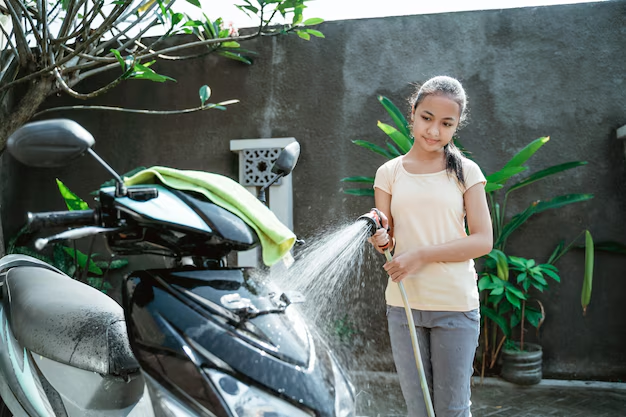
- Adjust distance to control cleaning intensity: closer for tough concrete, farther away for paint or wood.
- For detergent use, switch to the detergent setting or attach the foam applicator, apply soap from bottom up, let it dwell briefly, then rinse at higher pressure if appropriate.
- When finished, release the trigger, turn off the Electric Pressure Washer, then turn off the water at the tap.
- Squeeze the trigger again to release remaining pressure, then disconnect hoses and nozzles.
Common jobs and starting settings
| Task / Surface | Nozzle / Pressure | Distance from surface | Finish cues | Common mistakes |
|---|---|---|---|---|
| Concrete patio or driveway | Medium or rotary nozzle; mid to high pressure | 30–45 cm | Dirt lifts evenly; uniform lighter color appears | Holding too close and leaving wand in one spot, causing visible streaks |
| Wood deck boards | Wide spray nozzle; low to mid pressure | 45–60 cm | Grime washes off; wood texture remains intact, no fuzzing | Using a narrow jet that gouges or raises wood grain |
| House siding (vinyl or painted) | Wide spray; low pressure | 60–90 cm | Mold and dirt rinse away; no paint chipping | Spraying upward under laps and forcing water behind siding |
| Car or truck wash | Wide fan; lowest pressure, detergent then rinse | 60–100 cm | Road film loosens after detergent dwell; glossy finish after rinse | Using high pressure too close and damaging clear coat or trim |
| Outdoor furniture (plastic/metal) | Medium spray; low to mid pressure | 45–60 cm | Dust and algae rinse away without bending pieces | Spraying directly into joints and fabric seams, trapping water |
| Fences (wood) | Wide fan; low pressure | 60 cm or more | Surface lightens evenly; no splintering | Working too close, leaving stripes and rough fibers |
Cleaning and maintenance that doesn’t ruin parts
After each use
- Turn off the Electric Pressure Washer and switch off the water supply at the tap.
- Trigger the spray gun until water stops flowing to relieve pressure from the system.
- Disconnect the garden hose and high-pressure hose; coil them loosely without tight bends or kinks.
- Wipe down the exterior with a damp cloth to remove dirt and residue, especially around vents and controls.
- Remove and rinse nozzles with clean water to clear any grit from the tiny orifices.
Weekly or frequent-use care
- Check the inlet filter screen and rinse it under running water if you see debris or discoloration.
- Inspect hose connections and O-rings for wear or flattening, replacing if they look cracked or crushed.
- Look over the power cord for damage, especially near the plug and strain relief points.
- If your Electric Pressure Washer has a detergent tank, empty and rinse it so detergent does not dry and clog passages.
When it smells odd, sounds rough, or loses power
- Stop using the Electric Pressure Washer and unplug it if you smell burning or see smoke; do not keep testing it.
- If the pump has become noisy or vibrates more than usual, check for blocked nozzles and clogged inlet filters.
- When pressure feels weak, flush the system by running clean water through with a wide nozzle and no detergent.
What not to do
- Do not use harsh solvents, gasoline, or strong chemicals in the detergent system; they can damage seals and plastic parts.
- Do not scrape nozzles with needles, nails, or knives; use soft brushes or clean water instead to avoid changing the spray pattern.
- Do not store the Electric Pressure Washer with pressure still in the hose; this strains seals and connectors.
- Do not leave the unit outside unprotected for long periods; prolonged sun and weather age hoses and plastics quickly.
- Do not allow water to freeze inside the pump or hoses; expansion can crack internal components.
Two common maintenance complaints and quick checks
Complaint: Weak pressure
- Confirm the garden hose tap is fully open and the hose is not kinked.
- Check and clean the inlet filter screen.
- Inspect the nozzle for blockage and soak in warm soapy water if needed.
- Look for leaks at hose connections that could be bleeding off pressure.
Complaint: Motor keeps starting and stopping rapidly
- Make sure the trigger is fully released when you are not spraying; light pressure can confuse the pump.
- Check for small leaks or drips on the high-pressure side that prevent the system from reaching full shut-off pressure.
- Inspect O-rings at the gun and hose ends and replace worn ones.
- Ensure no nozzle or accessory is partially blocked, causing unstable back pressure.
Troubleshooting that gets you unstuck fast
Use this section when the Electric Pressure Washer is having a mood. The pattern is simple: symptom, likely cause, quick fix.
Quick troubleshooting path if it will not start
- Check that the outlet has power by testing it with another device.
- Press the reset button on the plug’s GFCI block if present.
- Verify the On/Off switch on the Electric Pressure Washer is actually in the On position.
- Confirm the power cord is fully inserted and not damaged.
- If it still does not start and the cord and outlet are fine, stop and seek service.
Symptom → Likely cause → Fix
| Symptom | Likely cause | Fix |
|---|---|---|
| Unit will not turn on | No power at outlet, tripped GFCI, or damaged cord | Test outlet with another device, reset GFCI, inspect cord; if damaged, stop using and arrange service. |
| Motor hums but does not run | Low voltage or internal motor issue | Unplug immediately; avoid extension cords; if hum persists on a good outlet, seek professional service. |
| Motor runs but no water at nozzle | Water supply off, airlock, or blocked nozzle | Open tap fully, purge air by squeezing trigger with unit off, clean or replace nozzle. |
| Pressure is weak | Partially closed tap, clogged inlet filter, worn nozzle, or leaks | Fully open tap, rinse filter screen, check for leaks, and inspect nozzle for wear or debris. |
| Pressure surges up and down | Blocked nozzle, air in system, or inconsistent water supply | Clean nozzle, purge air by running water through at low pressure, ensure hose is not kinked. |
| Motor starts and stops repeatedly when not spraying | Leak on high-pressure side or trigger not fully released | Inspect for drips at connections, replace O-rings, confirm trigger safety is fully engaged. |
| Water leaking at gun or hose ends | Damaged or missing O-rings, loose fittings | Replace O-rings with correct size, tighten fittings by hand; avoid over-tightening metal parts. |
| Detergent not drawing | Wrong nozzle selected or detergent line clogged | Switch to low-pressure/soap nozzle, check detergent tube for kinks, flush with clean water. |
| Unit shuts off during use | Overheating, overloaded circuit, or long continuous run | Let the Electric Pressure Washer cool, avoid sharing the circuit with other heavy loads, use shorter spray cycles with pauses. |
| Excess vibration or loud knocking | Loose mounts, internal pump issue, or severe air in system | Check for loose screws or panels, purge air thoroughly; if noise persists, stop use and have it inspected. |
| Water leaking from bottom of unit | Normal pump bypass drips or internal leak | Small drips briefly after use can be normal; steady leaking during use usually needs professional service. |
| Spray pattern is uneven or streaky | Clogged or worn nozzle | Soak nozzle in warm soapy water, brush gently, or replace if pattern stays distorted. |
When to stop and get service
Sometimes the smartest DIY move is to put the tool down.
- Visible damage to the power cord, plug, or GFCI block.
- Strong burning smell, smoke, or sparking from the Electric Pressure Washer.
- Persistent water leaks from inside the housing rather than from hose connections.
- Motor humming without turning, even with proper power and no hose blockages.
- Repeated tripping of breakers or GFCI outlets when the unit is turned on.
- Cracked pump housing or obvious structural damage after a fall or impact.
- Any internal part rattling loosely inside the case after the unit is moved.
Smart habits that save time
Storage tips
- Store the Electric Pressure Washer indoors or under cover, away from direct sun and rain.
- Drain hoses and pump as much as possible by briefly running the unit without pressure, then triggering the gun with power off.
- Coil hoses loosely on a reel or hook; tight coils shorten hose life and cause frustrating kinks.
- Keep nozzles together in a dedicated holder or small container so you are not hunting through drawers mid-project.
Accessory use with less hassle
- Use only detergents marked as safe for pressure washer use to protect seals and pump components.
- Rinse detergent lines with clean water after each use by running the unit on a rinse setting for a short period.
- Reserve high-aggression accessories like turbo nozzles for durable surfaces such as concrete and brick.
Habits that improve cleaning quality
- Pre-rinse surfaces to remove loose dirt; then apply detergent if needed, then rinse again at higher pressure.
- Work in small, manageable sections so you can see your progress and avoid missing strips.
- Test settings on an inconspicuous area first, especially on paint, wood, or composite materials.
Quick FAQ
Can I use hot water with my Electric Pressure Washer?
Most Electric Pressure Washer units are designed for cold or mildly warm water, generally below about 40 °C. Using very hot water can damage seals and shorten pump life.
Is it safe to use an extension cord?
It is better to avoid extension cords. If you must use one, choose a heavy-gauge, outdoor-rated cord and keep it as short as practical to prevent overheating and voltage drop.
Why does my Electric Pressure Washer stop when I release the trigger?
That behavior is normal. Many units use a pressure switch that shuts the motor off when you are not spraying to reduce wear and noise.
Can I wash my car with an Electric Pressure Washer?
Yes, with low pressure, a wide fan pattern, and plenty of distance from the paint. Always test on a small area and avoid aiming directly at rubber seals or decals.
How long can I run the Electric Pressure Washer continuously?
Shorter sessions are kinder to the pump. Aim for bursts of several minutes of spraying with short pauses rather than holding the trigger down continuously for very long stretches.
Do I need special detergent?
Use detergents labeled for pressure washer use, or at least ones that are low-foaming and safe for the surfaces you are cleaning. Avoid bleach-heavy mixtures unless the instructions for your cleaners explicitly allow it.
Why is the pressure lower when I use detergent?
Many Electric Pressure Washer systems switch to a low-pressure mode for detergent application. This helps the detergent cling and protects delicate surfaces while soaping.
Can I use well water or water from a tank?
You can, as long as the water is reasonably clean and the supply is steady. Install an extra inline filter if your water carries sand or grit, as particles are rough on pumps and nozzles.
Is it okay to store my Electric Pressure Washer outside?
Short-term, under cover, can work. For long-term storage, keep it in a dry, sheltered space and protect it from freezing to avoid pump and hose damage.
What should I do before winter storage?
Drain as much water as possible from the pump and hoses, coil hoses loosely, and store the Electric Pressure Washer in a place that stays above freezing if you can.
Can I repair a leaking hose with tape?
Tape fixes are usually short-lived at high pressure. It is safer and more reliable to replace a damaged high-pressure hose entirely.
Why does my Electric Pressure Washer still spray briefly after I turn it off?
Some water remains pressurized in the hose. Always squeeze the trigger after turning the unit off and closing the tap to relieve that pressure before disconnecting anything.
Discover More
- Air Conditioner
- Air Fryer
- Air Purifier
- Automatic Soap Dispenser
- Barbecue Grill
- Beverage Cooler
- Beverage Dispenser
- Beverage Fridge
- Blender
- Boiler
- Bread Maker
- Bread Slicer
- Bread Toaster Oven
- Can Opener
- Carpet Cleaner
- Ceiling Fan
- Ceiling Heater
- Ceiling Mounted Heater
- Ceiling Mounted Vent Fan
- Central Vacuum
- Charcoal Grill
- Citrus Juicer
- Clothes Dryer
- Clothes Steamer
- Coffee Grinder