Electric Wok Owner’s Guide: Real-World Help, Not Just Fine Print
Quick start you can finish fast
You want food, not a semester of reading. Here’s how to get your Electric Wok ready quickly and safely.
- Place the Electric Wok on a flat, heat-resistant surface with at least 4 in (about 10 cm) of space all around, away from walls and curtains.
- Make sure the power control is set to Off before plugging anything in.
- Remove the lid, inner wok pan, and any accessories from the Electric Wok base.
- Wash the inner wok pan, lid, and accessories in warm soapy water, then rinse and dry thoroughly.
- Wipe the heating base and power cord with a slightly damp cloth only; keep water away from electrical parts.
Many people like to do a quick “empty warm-up” to burn off any factory residues.
- Reassemble the Electric Wok fully, with the inner wok pan seated correctly on the base.
- Plug it in and set the heat to a medium setting for about 5–10 minutes.
- Turn it Off, unplug, and let it cool before your first cooking session.
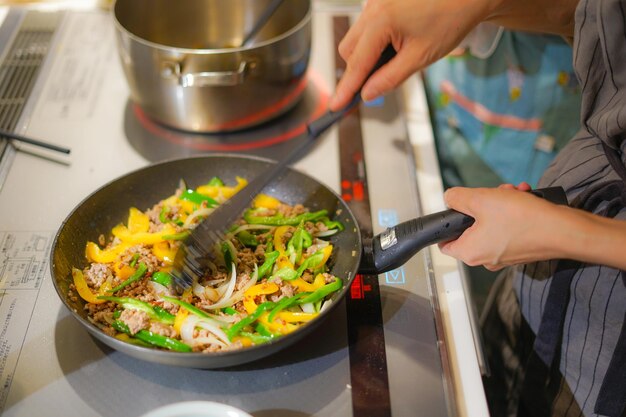
First-use cooking example: simple vegetable stir-fry
This gives you a feel for the heat and helps you see how fast your Electric Wok actually cooks.
- Add about 1–2 tablespoons of high smoke-point oil (such as canola, peanut, or sunflower) to the inner wok pan.
- Preheat on medium-high heat (around 350–400°F / 175–200°C) for about 3–5 minutes, until the oil shimmers.
- Add sliced firm vegetables (bell pepper, carrot, snap peas, onion), about 3–4 cups total.
- Stir constantly for about 5–8 minutes, until vegetables are crisp-tender and lightly browned in spots.
- Turn Off, unplug, and transfer food to a plate or bowl right away so it doesn’t overcook.
Know your parts without guessing
Most units have
- Heating base: The main body with the built-in heating element. This is what actually gets hot.
- Inner wok pan or bowl: The removable nonstick or stainless pan where food cooks. Designed for high-heat stir-frying and sautéing.
- Temperature control dial or slider: Lets you adjust heat from low to high, sometimes with approximate temperature markings.
- Power indicator light: Turns on when the Electric Wok is heating. A quick visual “yes, it’s actually on.”
- Glass or metal lid: Helps trap heat and moisture for simmering, steaming, or keeping food warm.
- Handles on the wok pan and/or base: Stay-cool or low-heat handles for moving the empty or lightly loaded wok safely.
- Power cord: Fixed or detachable cord that connects the Electric Wok to the outlet.
Some units have
- Detachable power probe or control unit: A plug-in thermostat with a dial that connects directly to the base, often with markings like Warm, Low, High.
- Steam vent in the lid: Releases excess steam to reduce splatter and prevent rattling.
- Nonstick coating in the pan: Makes cleanup easier and allows cooking with less oil, but needs gentle utensils and cleaning.
- Measurement markings inside the wok: Helpful lines for adding liquids for soups, stews, and braises.
- Support ring or stand: A ring that holds the wok pan at the correct distance from the heating element.
- Accessory rack or steaming tray: Used for steaming dumplings, vegetables, or buns over a small amount of simmering water.
If you are unsure what a part does, look at where it touches the Electric Wok: if it touches the bottom, it usually affects heat transfer; if it clips to the side or lid, it usually affects steam or convenience.
Safety that actually prevents problems
- Always place the Electric Wok on a stable, heat-resistant surface so it cannot tip when you stir vigorously.
- Keep the area around the Electric Wok clear of towels, paper, and packaging; hot oil can splatter outward.
- Use oil sparingly; too much oil at high heat can splatter heavily and make surfaces very slippery.
- Never move the Electric Wok while it is hot and full of food; transfer the food out first, then let the unit cool.
- Unplug the Electric Wok when not in use, and before cleaning or reassembling parts.
- Use only wooden, silicone, or heat-safe plastic utensils on nonstick surfaces to avoid scratching the coating.
- Check the power cord regularly and keep it away from the hot base and from hanging over counter edges.
- Do not immerse the heating base or any plug-in temperature probe in water; wipe them with a damp cloth instead.
- Let the Electric Wok cool completely before rinsing or washing the inner pan to prevent warping or damage.
- Be cautious with marinated foods; excess liquid dramatically lowers cooking temperature and increases splatter.
- If you notice unusual smoke, smell, or noise, turn the Electric Wok Off and unplug it while you investigate.
Daily use for better results
Think of your Electric Wok as a high-heat pan with its own burner built in. The routine below keeps food flavorful and the experience predictable.
- Set up the Electric Wok on a clear, stable surface, away from overhead cabinets.
- Check that the inner wok pan is properly seated on the base and the temperature dial is at Off.
- Prepare ingredients before heating: slice meats and vegetables, measure sauces, and keep them nearby.
- Plug in the Electric Wok, set the desired heat, and allow it to preheat until the oil shimmers or a drop of water sizzles immediately.
- Cook in batches rather than dumping everything in at once; high-heat contact with the surface is what gives you browning.
- Stir or toss food frequently for stir-fries; leave it alone for a short time when searing or shallow-frying to develop color.
- Adjust heat mid-cook if needed: turn it down for sauces and simmering, up for quick searing.
- Turn Off and unplug when cooking is done, then transfer food to serving dishes so it doesn’t overcook or dry out.
- Allow the Electric Wok to cool before cleaning to protect the nonstick surface and heating elements.
Common foods and starting points
| Food / Task | Starting heat & time | Doneness / finish cues | Common mistakes |
|---|---|---|---|
| Vegetable stir-fry | Medium-high, 350–400°F / 175–200°C, about 5–8 minutes | Veggies bright, crisp-tender, light browning on edges | Overloading the wok; leads to soggy, steamed vegetables |
| Beef or chicken stir-fry | High heat, about 375–425°F / 190–220°C, 6–10 minutes total in batches | Meat browned on outside, cooked through but still juicy | Adding meat straight from fridge in big clumps; causes sticking and pale meat |
| Fried rice | Medium-high heat, 350–400°F / 175–200°C, about 8–12 minutes | Rice hot, separate grains, slight toasty aroma | Using freshly cooked wet rice; results in heavy, sticky texture |
| Noodle stir-fry | Medium to medium-high, 325–375°F / 165–190°C, about 6–10 minutes | Noodles heated through, coated with sauce, slight caramelization | Too much sauce early on; noodles stew instead of fry |
| Shallow frying (cutlets, tofu cubes) | Medium to medium-high, 325–375°F / 165–190°C, 5–12 minutes depending on size | Even golden-brown crust, interior cooked through | Oil not preheated; food absorbs oil and turns greasy |
| Steaming (with rack) | Medium heat to bring water to simmer, then low-medium to maintain, 8–15 minutes | Food hot throughout, tender but not mushy | Letting the water level get too low; risk of scorching |
| One-pan curry or stew | Brown ingredients on medium-high, then simmer on low-medium, 20–40 minutes | Protein tender, sauce slightly thickened | Simmering on very high heat; sauce reduces too fast or sticks |
Cleaning and maintenance that doesn’t ruin parts
After each use
- Turn the Electric Wok Off, unplug it, and let it cool completely.
- Remove the inner wok pan and lid.
- Wash the pan, lid, and accessories in warm soapy water with a soft sponge; avoid abrasive pads.
- Rinse and dry thoroughly, paying attention to rims and handles where water can hide.
- Wipe the heating base and power control with a soft, slightly damp cloth; then wipe dry.
Weekly or frequent-use care
- Check the underside of the inner wok pan and the top of the heating base for built-up residue; gently wipe off burnt spots with a non-scratch pad or nylon brush.
- Inspect the power cord and plug for kinks, cracks, or discoloration.
- Verify that any vents or gaps around the base are free of dust and food particles.
When it smells odd or seems to perform poorly
- Look for caked-on oil or sauce on the outside bottom of the wok pan; buildup can smoke and reduce heat transfer.
- Deep-clean the inner pan by soaking it in warm soapy water for about 15–20 minutes before gently scrubbing.
- Check that the pan is sitting flat on the heating base and not rocking; misalignment reduces contact and heat.
- Try a break-in cycle: run the Electric Wok empty (with no oil) on medium heat for 5–10 minutes to burn off lingering odors, then let it cool and wipe down.
What not to do
- Do not immerse the heating base or any plug-in control unit in water.
- Avoid metal scouring pads or abrasive cleaners on nonstick surfaces; they can scratch and shorten the pan’s life.
- Do not use oven cleaner, bleach, or harsh solvents on any part of the Electric Wok.
- Avoid sudden temperature shocks, such as running cold water into a very hot pan; this can warp metal and damage coatings.
- Do not store food in the inner wok pan for long periods; acids and salt can damage coatings over time.
Two common complaints and quick checklists
Complaint: Food is starting to stick more than it used to.
- Check for visible scratches or worn spots in the nonstick surface.
- Use a little more oil for high-heat cooking, especially with lean proteins.
- Let the Electric Wok preheat properly so food sears instead of gluing itself to a lukewarm surface.
- Switch to wooden or silicone utensils if you have been using metal.
Complaint: It feels like the Electric Wok is not getting hot enough.
- Make sure the inner pan is fully seated and making flat contact with the heating base.
- Cook smaller batches; reduce the amount of food loaded at one time.
- Check that the power dial is actually set to a higher heat, not stuck near Warm or Low.
- Confirm the outlet is working properly with another appliance.
Troubleshooting that gets you unstuck fast
Your Electric Wok is not moody, it just needs a few conditions to be right. Use the table below to match symptoms with likely causes and fixes.
| Symptom | Likely cause | Fix |
|---|---|---|
| Electric Wok will not turn on | Not plugged in, loose plug, or bad outlet | Check the outlet with another device, push plug in firmly, try a different outlet if needed. |
| Power light on, but pan not heating | Pan not seated on base or faulty heating element | Remove and reseat the pan so it sits flat. If still cold, discontinue use and seek service. |
| Heats very slowly | Overloaded with food or pan not making full contact | Cook smaller batches and ensure the pan is flat and stable on the base. |
| Food burns on some spots but is raw in others | Uneven stirring or leaving thick piles of food in the center | Spread food out and keep it moving, especially thicker pieces. |
| Constant smoke during cooking | Heat set too high or old oil and residue on pan | Lower the heat, clean the pan thoroughly, and use fresh, high smoke-point oil. |
| Strong burned smell even when empty | Buildup of grease on the underside of pan or on heating base | Unplug, cool, then carefully clean both the underside of the pan and the base surface. |
| Food sticks badly | Pan not preheated, very lean food, or worn nonstick coating | Preheat with a bit of oil, avoid overcrowding, and inspect the coating for damage. |
| Liquid boils over the sides | Pan too full or boiling on too high a heat | Reduce liquid level, lower the heat, and use the lid slightly ajar to control boiling. |
| Lid rattles and spits liquid | Trapped steam with no escape path | Open any steam vent, tilt the lid slightly, and reduce heat a little. |
| Clicking sounds from base | Thermostat cycling to maintain temperature | This is often normal. If accompanied by power loss or smell, unplug and have it inspected. |
| Electric Wok shuts off during use | Overheat protection triggered or loose power probe connection (if present) | Unplug, let it cool fully, check for blocked vents or misaligned parts, then reconnect firmly. |
| Uneven browning even in small batches | Cold ingredients straight from fridge or inconsistent stirring | Let ingredients sit at room temperature briefly and stir more evenly. |
If it will not start at all
- Check that the Electric Wok is plugged directly into a working wall outlet, not a loose power strip.
- Verify the power dial is not set to Off or Warm-only; turn to a clear cooking setting like Medium.
- If your Electric Wok uses a detachable power probe, ensure it is fully inserted into both the wok and the outlet.
- Let the unit cool completely for at least 20–30 minutes, then try again; overheating protection can temporarily cut power.
- If none of these steps bring it back to life, stop using it and arrange professional service.
When to stop and get service
Your Electric Wok is a tough worker, but there are times when “one more try” is not the right move.
- The power cord or plug is cracked, melted, or feels hot to the touch.
- You see sparks, arcing, or hear loud popping noises from the base or control unit.
- The Electric Wok emits a burning plastic or electrical smell that continues after cleaning.
- The heating base has visible cracks, warping, or damage from impact.
- The pan no longer heats at all, even though the power light comes on and the outlet is known to work.
- Liquid has spilled into the control connection or inside the base and you cannot dry it completely from the outside.
- The nonstick coating is peeling or flaking in larger areas, not just minor cosmetic wear.
- The unit repeatedly trips a breaker or fuse when plugged in alone.
In these cases, stop using the Electric Wok until it has been inspected or replaced.
Smart habits that save time
A few small habits make your Electric Wok easier to live with and help it last longer.
- Keep the Electric Wok assembled and stored where you can reach it easily; if it is buried deep in a cabinet, you will use it less.
- Store the inner wok pan and lid dry and uncovered or slightly ajar to prevent trapped moisture and odors.
- Use a soft cloth or paper towel lightly oiled to wipe the nonstick surface after drying; this can help maintain its slickness.
- Pre-cut stir-fry ingredients in batches and freeze them flat; you can grab a bag and cook quickly on busy days.
- Use silicone or wooden utensils only, and keep one dedicated to the Electric Wok so you are not tempted to grab a metal spatula in a rush.
- If you use liners or steaming parchment, trim them so they do not cover the entire bottom in a thick layer; the wok needs direct contact for even heat.
- Group similar-cooking ingredients in small bowls (hard vegetables in one, quick-cooking greens in another) to add them at the right time.
For storage, let the Electric Wok cool fully, coil the cord loosely, and avoid stacking heavy items on top of the pan or lid to prevent warping or cracking.
Quick FAQ
Can I use metal utensils in my Electric Wok?
On bare stainless surfaces, yes, with care. On nonstick surfaces, it is better to use wood or silicone to protect the coating.
Does the Electric Wok need to be preheated?
Yes. A short preheat of about 3–5 minutes with a bit of oil gives better browning and reduces sticking.
What kind of oil works best?
Use oils with higher smoke points such as peanut, canola, sunflower, or refined vegetable oil. Avoid large amounts of low smoke-point oils like unrefined olive oil at high heat.
Can I cook without any oil?
For some dishes you can use very little oil, but completely dry cooking at high heat often leads to sticking and uneven browning, especially with proteins.
Is it safe to wash the inner wok pan in the dishwasher?
Some pans tolerate dishwashers, but gentle hand washing helps nonstick and coatings last longer. If you want maximum life, hand wash.
Can I use the Electric Wok to deep fry?
You can shallow-fry and fry modest amounts, but filling the pan deeply with oil is harder to control and increases splatter and mess. Stay with moderate oil depths and monitor closely.
Why is my stir-fry watery instead of crisp?
Too much food, too much sauce at the start, or ingredients that are very wet will create steam. Pat ingredients dry, cook in smaller batches, and add most sauces near the end.
Can I leave food in the Electric Wok to keep it warm?
For short periods on a low or Warm setting, yes. For longer holds, transfer to a suitable dish to avoid overcooking and drying out.
Is it normal for the Electric Wok to cycle on and off?
Yes. Many units use a thermostat that turns the heating element on and off to hold temperature. Occasional clicking or the light cycling is typical.
How full can I make the Electric Wok?
For most stir-fry work, filling the wok about halfway or less gives the best results. For saucy dishes, keep liquids at least about 1 inch below the rim to prevent boil-overs.
Can I use the Electric Wok outdoors?
It is intended for dry, indoor use on a stable counter. Wind, moisture, and uneven surfaces outside can interfere with safe operation.
With these guidelines, your Electric Wok should become a fast, dependable tool for weeknight meals instead of another appliance collecting dust. You can absolutely handle it.
Discover More
- Air Conditioner
- Air Fryer
- Air Purifier
- Automatic Soap Dispenser
- Barbecue Grill
- Beverage Cooler
- Beverage Dispenser
- Beverage Fridge
- Blender
- Boiler
- Bread Maker
- Bread Slicer
- Bread Toaster Oven
- Can Opener
- Carpet Cleaner
- Ceiling Fan
- Ceiling Heater
- Ceiling Mounted Heater
- Ceiling Mounted Vent Fan
- Central Vacuum
- Charcoal Grill
- Citrus Juicer
- Clothes Dryer
- Clothes Steamer
- Coffee Grinder
