Sewing Machine Help Guide: Practical Manual for Everyday Stitching
Quick start you can finish fast
Your Sewing Machine doesn’t need a diploma to run, just a calm setup and a few checks. Here’s how to get from box to first stitches without drama.
First setup checklist
- Place the Sewing Machine on a flat, stable table with good light and easy access to an outlet.
- Remove all packing foam, tape, and protective covers, including under the presser foot and around the needle area.
- Locate the power cord and foot pedal, and plug them into the Sewing Machine firmly.
- Check that a needle is installed straight and pushed fully up into the needle clamp, then tightened.
- Install the bobbin in its case or drop-in compartment, following the direction shown on the bobbin area diagram.
- Wind a fresh bobbin using the spool pin and bobbin winder, so you start with smooth, even thread.
- Thread the top thread path slowly, using every guide, tension discs, and the take-up lever in order.
- Turn the handwheel toward you to pick up the bobbin thread through the needle plate, then pull both threads under the presser foot toward the back.
First-use example: practice straight stitches on cotton
Before tackling a real project, give your Sewing Machine an easy warm-up on medium-weight woven cotton.
- Use all-purpose polyester thread and a universal needle around size 80/12.
- Select a straight stitch with medium length, around 2.5–3.0 mm if your model shows stitch length in millimeters.
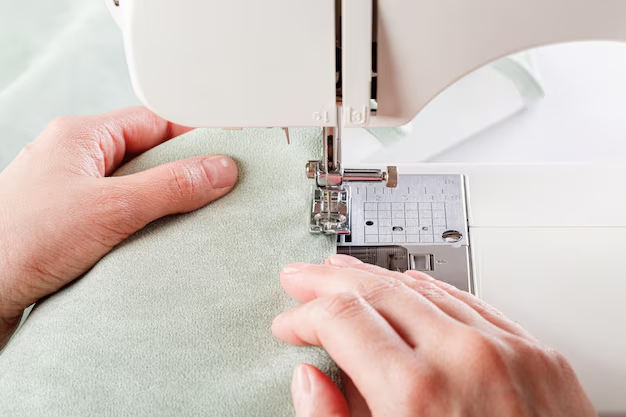
- Place 2 layers of scrap cotton under the presser foot and lower the presser foot lever fully.
- Press the foot pedal gently and sew for about 15–30 seconds to create a test seam of roughly 10–20 cm.
- Check stitches on top and bottom. Both sides should look even, with no big loops or tight puckering.
- If the fabric bunches or stitches look messy, adjust top tension slightly or rethread both top and bobbin threads.
Know your parts without guessing
Once you know what each part does, troubleshooting goes from “why?!” to “oh, that’s it.” Here’s a quick tour of a typical Sewing Machine.
Most units have
- Power switch – Turns the Sewing Machine on and off. Often found on the side.
- Foot pedal – Controls sewing speed based on how far you press it.
- Needle – Creates the hole and forms stitches with the bobbin thread. Must be sharp and straight.
- Presser foot – Holds fabric in place as it moves under the needle.
- Needle plate (throat plate) – Metal plate around the needle opening, with markings to help you keep seam allowances straight.
- Feed dogs – Little teeth under the presser foot that move the fabric backward as you sew.
- Spool pin – Holds the top thread spool in place.
- Thread guides and take-up lever – Direct and tension the top thread on its way to the needle.
- Tension dial – Adjusts how tight the top thread is pulled.
- Bobbin and bobbin case/drop-in bobbin area – Supplies the bottom thread and locks stitches with the needle thread.
- Stitch selector – A dial or buttons that choose stitch type such as straight, zigzag, or simple decorative stitches.
- Stitch length control – Sets how close together stitches are along the seam.
- Handwheel – Manually raises and lowers the needle; used for careful positioning.
- Presser foot lever – Raises and lowers the presser foot.
Some units have
- Speed control slider – Limits maximum speed so you cannot accidentally sew too fast.
- Needle up/down button – Sets whether the needle stops in up or down position when you pause.
- Start/stop button – Lets you run the Sewing Machine without the foot pedal.
- Automatic needle threader – Tiny mechanism that helps pull the thread through the eye of the needle.
- Adjustable presser foot pressure – Helps handle thick or very thin fabrics more smoothly.
- Free arm – A slimmer arm created when you remove part of the flatbed, making sleeves and small items easier to sew.
- Drop feed lever – Lowers feed dogs for free-motion quilting or darning.
- Buttonhole selector and foot – Helps create consistent buttonholes in multiple steps or automatically.
- Needle position control – Moves the needle left or right relative to the presser foot.
Safety that actually prevents problems
Your Sewing Machine is powerful enough to drive a needle through thick fabric repeatedly. A few careful habits keep that power working for you instead of against you.
- Unplug before hands go near the needle – For needle changes, cleaning, or removing jammed thread, disconnect power first.
- Keep fingers behind or to the sides of the presser foot, never directly in front of the needle path.
- Use the correct needle type and size for your fabric to reduce needle breakage and skipped stitches.
- Do not force thick stacks of fabric; if it resists, use a different needle, foot, or technique instead of pushing.
- Keep the Sewing Machine on a stable, non-wobbly surface to avoid sudden shifts while sewing.
- Turn off and unplug the Sewing Machine when not in use, especially around curious children or pets.
- Keep hair, scarves, cords, and loose sleeves away from the handwheel and moving parts.
- Do not sew over pins – Remove them just before they reach the presser foot to avoid bent needles and flying fragments.
- Use only dry hands when plugging in or operating electrical controls.
- If you smell burning, see smoke, or hear unusual loud noises, stop using the Sewing Machine and unplug it.
- Inspect cords for damage; do not use if the cord is cracked, frayed, or pinched.
Daily use for better results
A smooth routine makes sewing feel less like wrestling and more like gliding. Here’s a simple workflow that works for most projects.
- Choose the right needle and thread for your fabric and install a fresh needle regularly, especially before important projects.
- Wind a bobbin cleanly and evenly, filling it to the recommended line without overloading.
- Thread the Sewing Machine carefully along the marked path, making sure the presser foot is raised while threading.
- Bring up the bobbin thread with the handwheel and position both threads under the presser foot toward the back.
- Set stitch type and length suited to your fabric, starting with a straight stitch and moderate length.
- Place fabric under the foot, align with the seam guide on the needle plate, and lower the presser foot fully.
- Start sewing slowly, guiding the fabric lightly; let the feed dogs do the pulling, rather than tugging it yourself.
- Sew a few stitches at the beginning and end of seams in place (or use a lockstitch/backstitch) to secure seams.
- Trim threads after each seam so they do not tangle in later passes.
Common sewing tasks and starting settings
| Task / Fabric | Suggested stitch & needle | Finish cues | Common mistakes |
|---|---|---|---|
| Basic seam on medium cotton | Straight stitch, length 2.5–3.0 mm, universal needle 80/12 | Stitches look even both sides, fabric lies flat without puckers | Pulling fabric, causing crooked seams; tension too tight, causing puckering |
| Hemming jeans or denim | Straight stitch, length 3.0–3.5 mm, jeans/denim needle 90/14 or 100/16 | Stitches sit on top without skipping, seam feels strong when gently tugged | Using a fine needle that bends or breaks; forcing thick seams instead of raising foot or leveling |
| Sewing knit T-shirts | Zigzag or stretch stitch, length around 2.5–3.0 mm, ballpoint needle 75/11 or 80/12 | Seam stretches with fabric without popping, edges not badly wavy | Using straight stitch that pops when stretched; presser foot pressure too high, stretching fabric |
| Topstitching on cotton | Straight stitch, length 3.0–3.5 mm, universal or topstitch needle 80/12 | Visible line is straight and smooth, consistent distance from edge | Not using guides on the needle plate; sewing too fast near corners |
| Lightweight fabrics (voile, lining) | Straight stitch, length 2.0–2.5 mm, fine needle 70/10 | No pulled holes, fabric feeds evenly without being eaten by the needle plate | Using a large needle that snags; starting too close to the edge without leader fabric |
| Simple buttonholes | Buttonhole stitch, standard or buttonhole foot, needle matched to fabric | Both sides of buttonhole even in length, dense stitches but not a hard lump | Not stabilizing fabric with interfacing; not testing on scrap with actual button thickness |
| Zigzag finishing on raw edges | Zigzag stitch, width 3–5 mm, length 1.5–2.5 mm, universal needle matched to fabric | Thread catches edge without tunneling fabric, prevents excessive fraying | Using very wide zigzag on very thin fabric; sewing too close to the edge so fabric pulls in |
Cleaning and maintenance that doesn’t ruin parts
A Sewing Machine works best when lint and old thread are not camping inside it. A little regular care keeps stitches smooth and noise low.
After each use
- Turn off and unplug the Sewing Machine before any cleaning.
- Brush lint from around the needle plate, presser foot, and bobbin area using a small brush or soft paintbrush.
- Remove stray thread tails from the bobbin case and under the presser foot.
- Cover the Sewing Machine with a dust cover or case when not in use.
Weekly or after long sewing sessions
- Remove the needle plate and bobbin case/drop-in bobbin cover carefully.
- Brush out lint from feed dogs, bobbin race, and under the needle plate.
- If your manual allows oiling, add a tiny drop of sewing-machine oil to specified spots only, then run a few test stitches on scrap to absorb excess.
- Check the needle for burrs or bending; replace if you notice roughness, skipping, or a dull tip.
When it smells weird or performs poorly
- Stop sewing, turn off, and unplug the Sewing Machine.
- Let it rest and cool for at least 15–20 minutes if it feels warm.
- Open easily accessible panels (needle plate, bobbin area) and remove lint buildup thoroughly.
- Check for tangled thread wound around the bobbin area or handwheel shaft and remove gently.
- Rethread both top and bobbin threads completely, then test on scrap.
What not to do
- Do not use household oils, cooking oils, or spray lubricants; they gum up and attract more lint.
- Do not blow hard into the Sewing Machine; this pushes lint deeper or adds moisture.
- Do not use water, cleaners, or solvents inside the Sewing Machine; keep cleaning dry and gentle.
- Do not pry open sealed panels or adjust internal screws unless you are trained to service machines.
- Do not run the Sewing Machine without fabric for long periods at full speed; it adds wear without benefit.
Quick maintenance checklists for common complaints
Complaint: Stitches suddenly look messy
- Rethread the top thread with presser foot raised.
- Rethread or replace the bobbin, making sure it is wound evenly and installed in the correct direction.
- Check needle: replace if bent, dull, or the wrong type for the fabric.
- Brush lint from the bobbin area and under the needle plate.
- Reset tension dial to a middle setting and test on scrap.
Complaint: Sewing Machine is louder than usual
- Stop and unplug the Sewing Machine.
- Open the needle plate and bobbin area; remove packed lint and loose threads.
- If allowed, add a drop of sewing-machine oil to the hook/bobbin race area.
- Check that the needle is fully inserted and tightened firmly.
- Ensure the needle plate, bobbin cover, and any removable bed pieces are seated firmly.
Troubleshooting that gets you unstuck fast
When your Sewing Machine acts up, it is often complaining about thread, needle, or lint. Use this section to decode the symptoms quickly.
Quick decision path: if stitches look wrong
- If loops or knots appear on the bottom of the fabric, rethread the top thread with presser foot raised.
- If loops or knots appear on the top of the fabric, reinsert and rewind the bobbin and check bobbin tension if adjustable.
- If fabric is puckering, try lengthening stitch length slightly and reducing top tension a bit.
- If stitches skip, replace the needle with the right type and size for your fabric.
Common issues: symptom → likely cause → fix
| Symptom | Likely cause | Fix |
|---|---|---|
| Top thread breaking | Tension too tight, rough needle eye, thread caught in guide or spool notch | Lower top tension slightly, rethread, check needle and replace if damaged, use smooth quality thread |
| Bobbin thread breaking | Improperly wound bobbin, bobbin case tension very tight, lint in bobbin area | Rewind bobbin evenly, reinsert bobbin correctly, clean bobbin case and area |
| Loops on underside of fabric | Top tension too loose, top thread not in tension discs | Rethread with presser foot raised, then lower foot; increase top tension slightly and test |
| Loops on top of fabric | Bobbin thread not seated, bobbin inserted backward, bobbin tension off | Remove and reinstall bobbin following direction diagram, clean bobbin area, check bobbin case for damage |
| Skipped stitches | Dull or wrong needle for fabric, needle not fully inserted or bent | Install a new needle of the correct type (universal, ballpoint, jeans) and size; push it all the way up and tighten |
| Fabric not feeding forward | Feed dogs lowered, presser foot not down, very slippery or thick fabric | Raise feed dogs using lever, lower presser foot fully, consider using different presser foot or adjusting foot pressure |
| Bird’s nest of thread under fabric | Top thread not fully threaded, not under tension, or not held at start | Rethread top path, hold thread tails for first few stitches or use shorter thread tails, ensure presser foot is down |
| Needle breaking | Pulled fabric, hitting a pin or thick seam, wrong needle size, needle inserted incorrectly | Stop pulling fabric; guide lightly instead, remove pins before needle reaches them, use heavier needle for thick seams |
| Sewing Machine will not sew when pedal is pressed | Power off, loose pedal connection, bobbin winder engaged, safety feature active (such as buttonhole mode or open cover) | Check power switch and outlet, plug in foot pedal fully, disengage bobbin winder, close covers, reset mode |
| Machine runs but makes loud or grinding noises | Lint or thread jam in bobbin area, loose needle plate screw, lack of oil where required | Unplug, remove needle plate and bobbin case, clean lint and threads, tighten screws gently, oil only where recommended and test on scrap |
| Buttonholes uneven or distorted | Fabric not stabilized, incorrect buttonhole foot setup, inconsistent feeding | Use interfacing or stabilizer under fabric, attach buttonhole foot correctly, mark and test on scrap before sewing on garment |
| Thread bunching at start of seam | Threads not held, starting too close to fabric edge, no backstitch or lock | Hold both thread tails for first few stitches, start a little away from edge or use a scrap leader, secure start of seam |
If the Sewing Machine will not start at all
- Check that the power cord is firmly plugged into both the Sewing Machine and the wall outlet.
- Confirm the outlet works by trying another device or a different outlet.
- Ensure the power switch on the Sewing Machine is set to “on.”
- Check that the foot pedal is connected securely to the Sewing Machine.
- If the light turns on but the needle will not move, make sure the bobbin winder is not engaged.
- If nothing powers on after these checks, stop trying and consider professional service.
When to stop and get service
Most small annoyances you can fix at home. Some situations call for a professional to keep your Sewing Machine safe and reliable.
- Persistent loud grinding, clunking, or screeching noises even after cleaning and rethreading.
- Visible sparks, repeated smoking, or a strong burning smell from the Sewing Machine body.
- Power issues such as flickering lights, intermittent power loss, or hot power cord.
- Serious internal thread jams you cannot access without opening sealed panels.
- Broken or misaligned internal parts, such as the needle bar moving out of center or hitting the needle plate regularly.
- Repeated needle breaks at the same needle position, even with correct needles and gentle feeding.
- Bobbin case or hook badly scratched, chipped, or warped enough that it cannot hold tension.
- Any sign of liquid spilled inside the Sewing Machine housing.
Smart habits that save time
A few small habits can make your Sewing Machine feel friendlier and reduce “why is it doing this now?” moments.
Storage tips
- Cover the Sewing Machine with a soft cover or tuck it into its case to keep dust and lint off.
- Store needles, bobbins, and presser feet in a small organizer so you can find the right part quickly.
- Keep the Sewing Machine in a dry area away from direct sunlight to protect plastic and rubber parts.
Thread, bobbins, and accessories
- Use good-quality thread that is smooth and not fuzzy; cheap, old thread sheds more lint and breaks more often.
- Wind bobbins only on your Sewing Machine’s winder and do not mix different thread types or colors on one bobbin.
- Use bobbins designed for your Sewing Machine type; wrong bobbins can cause erratic tension and jamming.
- Keep commonly used presser feet handy: all-purpose, zipper, buttonhole, and, if available, a walking foot for tricky fabrics.
Habits that reduce mess and improve results
- Test stitches on a scrap of the same fabric before sewing the actual project each time you change fabric or thread.
- Change the needle regularly instead of waiting for obvious trouble.
- Trim thread tails as you go to avoid them getting sewn into seams or pulled into the bobbin area.
- Clean out lint at the end of each sewing session rather than waiting until issues appear.
- Keep a small trash bin or fabric scrap nearby to collect cut threads and fabric bits as you go.
Quick FAQ
How often should I change the needle on my Sewing Machine?
As a general guide, change it after about 6–8 hours of sewing or at the start of an important project, and anytime you notice skipped stitches or fabric snags.
Why does my Sewing Machine make loops on the bottom of the fabric?
The top thread is not under proper tension. Rethread the top path with the presser foot raised, then lower the foot and test again. Adjust top tension slightly tighter if needed.
Can I use any thread in my Sewing Machine?
Most everyday sewing works best with good-quality polyester or cotton-wrapped polyester thread. Very thick, stiff, or old brittle threads can cause breakage and tension issues.
Do I need a special needle for knit fabrics?
Yes, a ballpoint or stretch needle is best for knits. It slides between fibers instead of piercing them, which helps prevent skipped stitches and runs.
Why is my fabric getting sucked into the needle plate?
The fabric may be very thin, the needle might be too large or dull, or you may be starting too close to the edge. Use a finer needle and start a bit farther from the edge or use a scrap “leader” fabric first.
Is it okay to sew over pins?
It is strongly discouraged. Hitting a pin can bend or break the needle and damage the Sewing Machine or fabric. Remove pins as they approach the presser foot.
How tight should I set the thread tension?
Start with the tension dial in the middle and test on scrap. Adjust slightly up if loops form on the bottom, or down if the fabric puckers or bottom thread is pulled to the top.
Do I need to oil my Sewing Machine?
Many modern machines require occasional oil only in specific spots, while some are designed to be low-maintenance. Use only sewing-machine oil and only where indicated for your type of machine.
Why does my Sewing Machine needle keep breaking?
Common reasons include pulling the fabric, using the wrong needle size or type, hitting thick seams or hardware, or the needle not being fully inserted. Slow down at thick areas and let the feed dogs move the fabric.
What is the free arm for, and do I need it?
The free arm helps you sew small, circular pieces like sleeves, cuffs, and narrow hems more easily. It is not mandatory, but it is convenient for garments and alterations.
Can I use my Sewing Machine for very thick items like leather belts?
Only within reason. Light to medium faux leather or soft leather can sometimes be sewn with the right needle and foot, but very thick or stiff items usually require a heavy-duty machine designed for that work.
If you keep these tips handy, your Sewing Machine will feel less mysterious and more like a reliable workshop partner. You bring the ideas; it will handle the stitches.
Discover More
- Air Conditioner
- Air Fryer
- Air Purifier
- Automatic Soap Dispenser
- Barbecue Grill
- Beverage Cooler
- Beverage Dispenser
- Beverage Fridge
- Blender
- Boiler
- Bread Maker
- Bread Slicer
- Bread Toaster Oven
- Can Opener
- Carpet Cleaner
- Ceiling Fan
- Ceiling Heater
- Ceiling Mounted Heater
- Ceiling Mounted Vent Fan
- Central Vacuum
- Charcoal Grill
- Citrus Juicer
- Clothes Dryer
- Clothes Steamer
- Coffee Grinder
